
According to the National Institute of Child Health and Human Development, early intervention often combines multiple supports based on each child’s individual needs rather than relying on a single therapy.
Why ABA Therapy for Toddlers Looks Different Than Therapy for Older Children
One of the biggest misconceptions about ABA is that therapy looks the same regardless of age.
Toddlers require a very different approach than school-age children because they are still learning how to explore, communicate, regulate emotions, and interact with the people around them.
Rather than expecting long periods of attention or structured instruction, professionals work within activities that naturally capture a toddler’s curiosity.
A session might include:
- Blowing bubbles
- Stacking blocks
- Singing songs
- Reading books
- Pretend play
- Sensory activities
- Outdoor exploration
- Snack time
- Cleaning up toys
Although these moments may appear simple, each activity is intentionally selected to create opportunities to practice specific developmental goals in ways that are meaningful to the child. These are just a few examples of what might be included in a session, but activities vary widely depending on each child’s strengths, interests, and needs. For one child, the focus may be on building functional communication skills, while for another, it may be on participating in daily routines or increasing flexibility during transitions.
How Toddler ABA Therapy Teaches Daily Skills

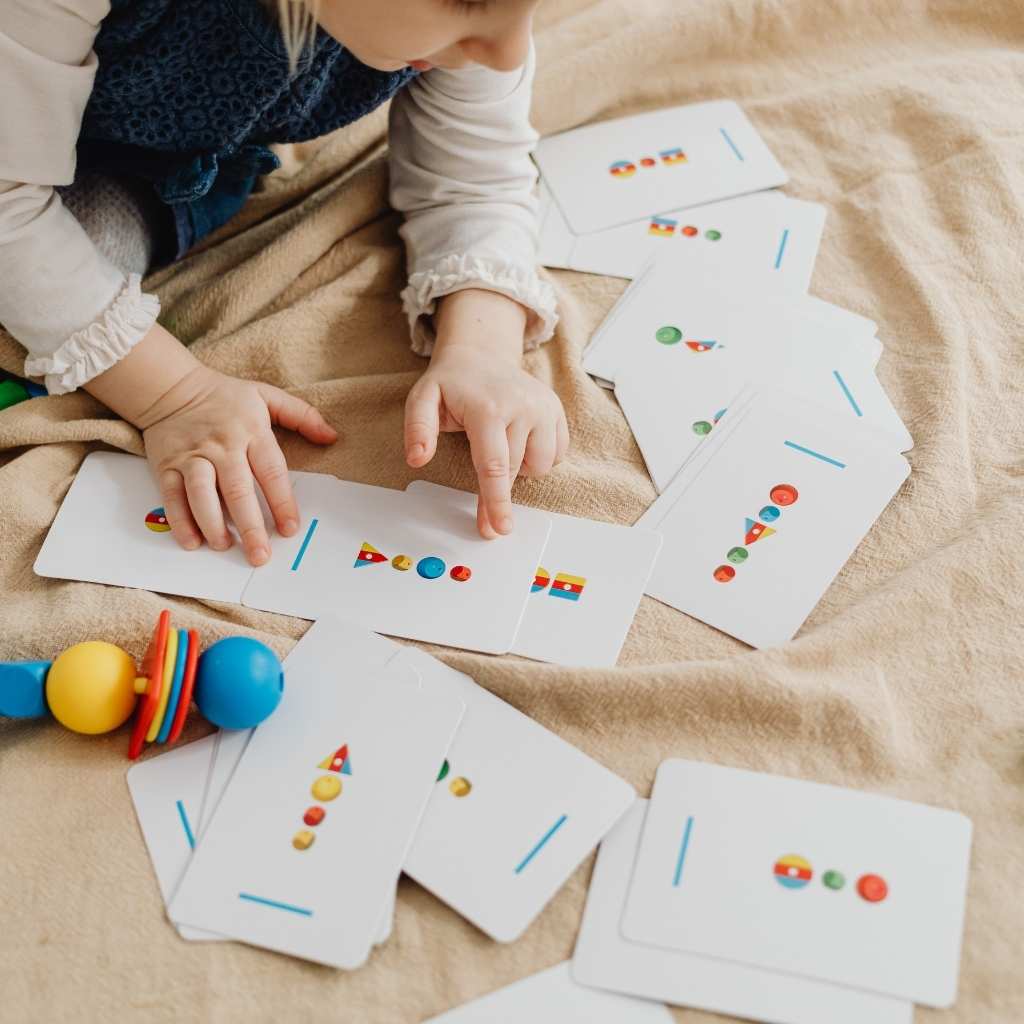
One of the defining features of toddler ABA therapy is that learning doesn’t have to happen at a table or during formal lessons. Many of the most valuable teaching opportunities occur during activities toddlers already enjoy.
Young children are naturally motivated by experiences that interest them. When therapists incorporate favorite toys, games, songs, or routines into teaching, children are more willing to participate and remain engaged.
Research on Naturalistic Developmental Behavioral Interventions describes approaches that use children’s interests, natural interactions, and developmentally appropriate activities to create meaningful learning opportunities.
These approaches combine behavioral principles with everyday experiences, helping children develop skills within activities that feel engaging and relevant to their daily lives. For example: practicing choice during snack time, working on taking turns when building with blocks, or practicing sharing attention or following directions with pretend play.
Toddler ABA Therapy Is Guided by Goals, Not Just Play
Parents are sometimes surprised to learn that although sessions in early intervention may look playful, every activity has a clinical purpose.

Behind every game, puzzle, or pretend-play activity is a carefully designed teaching plan based on evidence-based ABA principles.
The BACB states that BCBAs are responsible for assessing behavior, developing individualized treatment plans, monitoring progress, and making clinical decisions that guide the overall direction of services.
Skills ABA Therapy for Toddlers May Learn Through Play
Early childhood is a period when many foundational skills begin developing simultaneously.
Because every child is different, goals vary considerably, but ABA therapy for toddlers may support development in areas such as:
- Communication
- Social interaction
- Play skills
- Daily living skills
- Emotional regulation and flexibility
The skills addressed will depend on each child’s individualized treatment plan. Rather than following a standard curriculum, therapists prioritize goals that will have the greatest impact on the child’s ability to participate, communicate, learn, and navigate daily routines.
How Data Helps Guide Progress in Toddler ABA Therapy
While parents often notice the playful side of therapy, another important part happens behind the scenes.
Throughout sessions, RBTs collect information about how children respond to different teaching strategies, how independently they perform skills, and how progress changes over time, and share it with the BCBA to refine and adjust the treatment plan as needed.
Rather than relying on observation alone, this information helps the supervising BCBA make informed clinical decisions about whether goals should be adjusted, new skills introduced, or teaching strategies modified. Ongoing progress monitoring allows treatment plans to evolve as children develop new abilities and face new challenges, helping ensure therapy remains individualized and responsive to each child’s needs.
Helping Your Toddler Learn Through Meaningful Experiences at ABA Centers of Delaware

Toddlers learn best when they are actively engaged with the people, routines, and activities around them. Modern play-based ABA therapy recognizes this by combining evidence-based teaching strategies with experiences that feel natural, motivating, and meaningful to each child.
ABA therapists don‘t separate learning from childhood and enjoyment; they use the moments toddlers already enjoy to help build communication, independence, flexibility, social interaction, play skills, and participation across different settings. Every activity is selected with a purpose, while remaining responsive to the child’s interests, strengths, and developmental needs.
Whether your family is just beginning to explore early intervention or looking for more information about toddler ABA therapy, understanding what therapy actually looks like can help make the process feel less intimidating. Knowing that learning often happens through play, everyday routines, and meaningful interactions can provide reassurance as you consider the supports that may be right for your child.
If you have questions about toddler ABA therapy and early intervention, or your next steps, our team at ABA Centers of Delaware is here to help.
We work closely with families to develop individualized treatment plans that support each child’s unique strengths and create meaningful opportunities for growth in the early years. If you are in Delaware, reach out to us via our website or call us at (844) 855-8517