

Why Is Eye Contact Different in Autism?
Research by the Journal of Neurodevelopmental Disorders suggests that for some individuals on the spectrum, direct eye contact can feel overwhelming or even uncomfortable. Instead of being neutral, it may be:
- Sensory-intense
- Distracting
- Emotionally overstimulating
- Difficult to process alongside spoken language
Imagine trying to solve a math problem while someone shines a bright flashlight into your eyes. That’s similar to how intense direct gaze can feel for some individuals with ASD.
So, when we talk about autism and eye contact, we’re not talking about defiance or disinterest. We’re often talking about neurological differences in how social information is processed.
Is Lack of Eye Contact Always a Sign of Autism?
No. While lack of eye contact is included as a criterion for diagnosing autism according to the DSM-5, it does not automatically mean a person has autism.
Many factors may influence eye contact, including:
- Temperament (shy or cautious personality)
- Cultural norms
- Anxiety
- Speech delays
- Hearing differences
The Connection Between Autism and Joint Attention

To understand autism and eye contact more fully, it is important to discuss joint attention.
Joint attention refers to the shared focus of two individuals on an object, event, or interaction. For example, a child points to a plane in the sky and looks back at a caregiver to ensure they are also watching. This back-and-forth gaze shift builds communication and shared experience.
Joint attention is foundational for language development, social learning, and relationship building.
Children with autism may experience delays in joint attention. This does not mean they lack interest in connection, but they may not naturally coordinate eye gaze, gestures, and shared focus in the same way as neurotypical peers.
Importantly, joint attention is not the same as constant eye contact. It involves a purposeful, meaningful gaze related to shared experience, not prolonged staring.
When discussing autism and eye contact, focusing on joint attention often provides a more accurate and developmentally meaningful perspective.
Should Eye Contact Be Forced?
A common question surrounding autism and eye contact is whether children should be required to “look at me when I’m talking.”
Modern evidence-based practice emphasizes functional communication over forced behaviors. If a child can demonstrate attention, understanding, and participation without sustained eye contact, forcing direct gaze may not be necessary.
Instead of requiring prolonged eye contact, clinicians often focus on:
- Increasing responsiveness to name
- Encouraging natural gaze shifts during shared activities
- Strengthening joint attention skills
- Supporting comfortable social engagement
The goal is not to eliminate a lack of eye contact but to build meaningful interaction in ways that respect neurological differences.
How ABA Therapy Helps Improve Social Engagement
Early intervention and ABA-based support often target foundational social skills, including:
Building Motivation for Interaction
Children are more likely to look toward someone when that person is part of something enjoyable. Therapy uses preferred toys and activities to create positive social experiences.
Teaching Joint Attention Skills
Through play-based ABA strategies, BCBAs and RBTs encourage:
- Looking between an object and a person
- Sharing excitement
- Requesting items through eye gaze and gestures
Functional Communication Training
If a child struggles to express needs, frustration can reduce social engagement. Teaching effective communication, whether with spoken words, signs, or devices, can help reduce tension and other obstacles to functional communication for many with ASD.
Natural Environment Teaching (NET)
Rather than drilling skills at a table, ABA professionals embed learning into real-life routines, making eye contact part of meaningful moments.
Addressing Common Misconceptions
“If my child doesn’t make eye contact, they don’t care.”
Not true. Many children on the spectrum show affection in different ways, through proximity, shared interests, or physical closeness.
“Forcing eye contact teaches social skills.”
Forced eye contact can increase anxiety and reduce authentic interaction. Respectful engagement builds stronger long-term outcomes.
“They’ll grow out of it.”
Some children naturally increase eye contact with development. Others benefit from structured support. Early evaluation provides clarity.
When to Seek an Evaluation
If concerns about autism and eye contact are paired with speech delays, repetitive behaviors, or limited social engagement, consult:
- A developmental pediatrician
- A licensed psychologist
- An autism diagnostic specialist
Early answers lead to earlier support, and earlier support leads to better long-term outcomes.
Compassionate Autism Support That Grows with Your Child
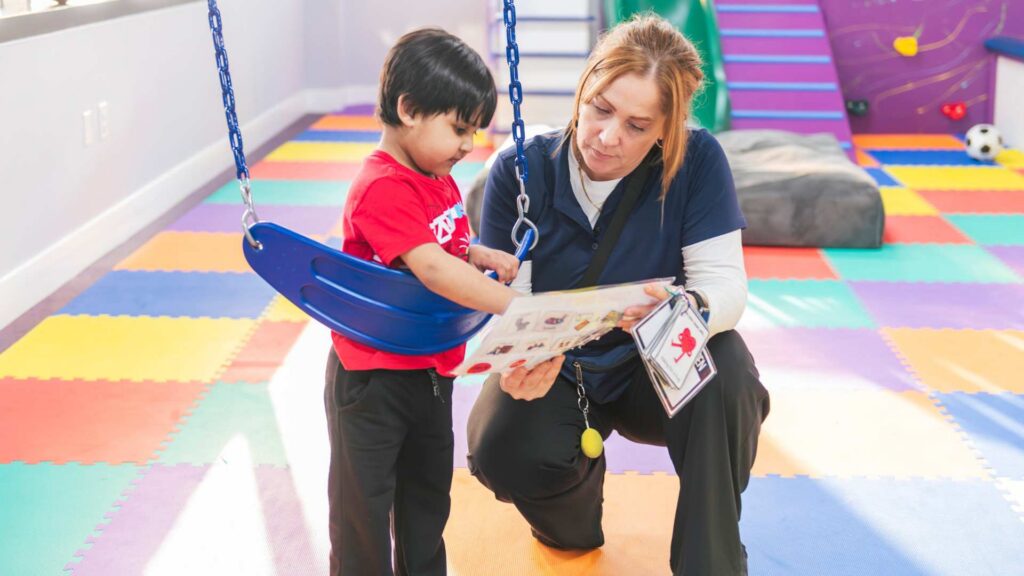
At ABA Centers of Delaware, we understand that autism looks different for every child—and so does eye contact.
We provide:
- ABA therapy for children and teens
- In-home services
- In-center therapy
- In-school support
Our programs focus on building communication, social engagement, independence, and confidence in ways that respect each child’s individuality.
Beyond ABA sessions, we create seasonal community events designed to foster connection, holiday gatherings, sensory-friendly celebrations, and peer interaction opportunities that help families feel supported and included.
If you’re ready to explore supportive ABA services for your child, call us at (844) 855-8517 or fill out our online form. Our team is here to guide you every step of the way!